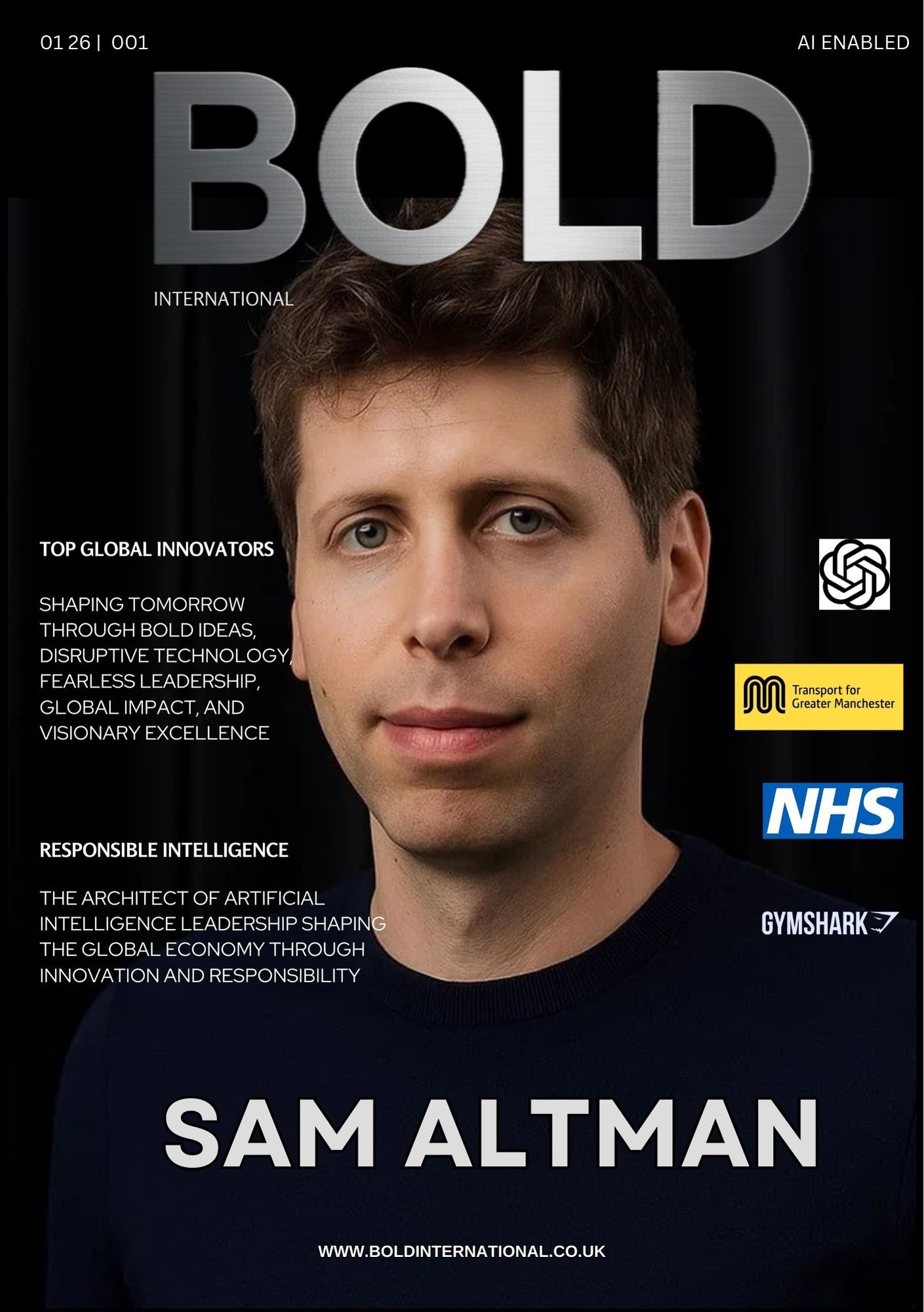
When we talk about modern artificial intelligence, it’s almost impossible not to talk about OpenAI and Sam Altman. Not because they were first to imagine AI, but because they changed how the world actually uses it. What started as a research-focused experiment has become one of the most influential technology organisations of our time.
We didn’t get here in a straight line. And that’s what makes the story worth telling.
OpenAI began in 2015 with a clear but cautious idea: advanced artificial intelligence should benefit everyone, not just a handful of corporations or governments. At the time, this sounded idealistic. AI research was expensive, slow, and mostly hidden inside academic labs or big tech firms. The idea of openly sharing breakthroughs felt risky, even naïve.
In the early years, progress was real but quiet. OpenAI built credibility through research papers, reinforcement learning experiments, and early models that impressed specialists more than the public. There was no hype cycle yet. Just long-term thinking, serious talent, and a willingness to say, “We’re not there yet.”
Then reality intervened.
As AI models grew larger and more capable, the costs grew too. Compute, data, and talent required capital on a scale few non-profits could sustain. This forced one of the first major turning points: OpenAI restructured into a capped-profit model. It wasn’t universally praised. Some critics saw it as a compromise of principles. Others saw it as realism. Internally, it was a recognition that influence without scale doesn’t change the world.
That decision unlocked the next phase.
Partnerships followed, most notably with Microsoft, bringing the infrastructure needed to train models at global scale. With that came speed. Not reckless speed, but focused momentum. OpenAI stopped being just a research lab and became a product organisation.
And then came the moment everything shifted.
When ChatGPT launched, the response was immediate and global. Within weeks, millions of people were using AI not as a concept, but as a daily tool. Writing emails. Learning new skills. Coding. Planning. Thinking. This wasn’t AI hidden behind enterprise systems. It was direct, human-facing, and surprisingly intuitive.
For businesses, the impact was tangible. Productivity jumped. Prototyping accelerated. Small teams started doing work that once required entire departments. Entire industries — marketing, software, education, customer service — began rethinking how work gets done. This wasn’t speculation. It showed up in adoption curves, cost savings, and time reclaimed.
But growth at that scale brings pressure.
OpenAI faced real ups and downs. Questions around safety, data use, governance, and control became louder. Internally, leadership decisions came under scrutiny. The brief but very public leadership crisis around Sam Altman wasn’t just corporate drama — it was a signal of how high the stakes had become. When the CEO of an AI company can move markets, talent, and policy discussions overnight, governance suddenly matters a lot.
What followed was another defining moment. Employees spoke. Partners responded. The board reset. Sam Altman returned. Stability was restored quickly, but not quietly. The episode made one thing clear to the world: OpenAI wasn’t just a startup anymore. It was critical infrastructure for the future of technology.
Since then, the focus has sharpened.
We’ve seen rapid advances in model capability, multimodal systems that understand text, images, audio, and code, and deeper integration into business workflows. AI is no longer a side tool. It’s becoming a layer that sits across how organisations think, decide, and build.
What’s often missed is how deliberate the growth strategy has been. OpenAI hasn’t chased every possible use case. It has focused on general-purpose systems that adapt across industries. That choice has created leverage. One core platform. Thousands of applications. Millions of users.
Looking ahead, the direction is clear, even if the details aren’t always public. More capable models. Better alignment with human intent. Stronger safety systems. Deeper collaboration with governments and enterprises. The goal isn’t just smarter AI. It’s AI that can be trusted at scale.
For business leaders, the lesson is bigger than technology. OpenAI’s journey shows how vision, when paired with execution and adaptability, can reshape entire markets. It also shows that growth brings responsibility — and that transparency, even when uncomfortable, builds long-term credibility.
We’re watching a company grow into its influence in real time. Not perfectly. Not quietly. But with impact that’s impossible to ignore.
This story is still unfolding. But one thing is already certain: OpenAI didn’t just accelerate AI adoption. It changed who gets to use it, how fast ideas turn into products, and how the future of work is being written.
And from a global business perspective, that makes OpenAI not just a technology company — but one of the defining institutions of this decade.